
Seattle Truck Accident Lawyer
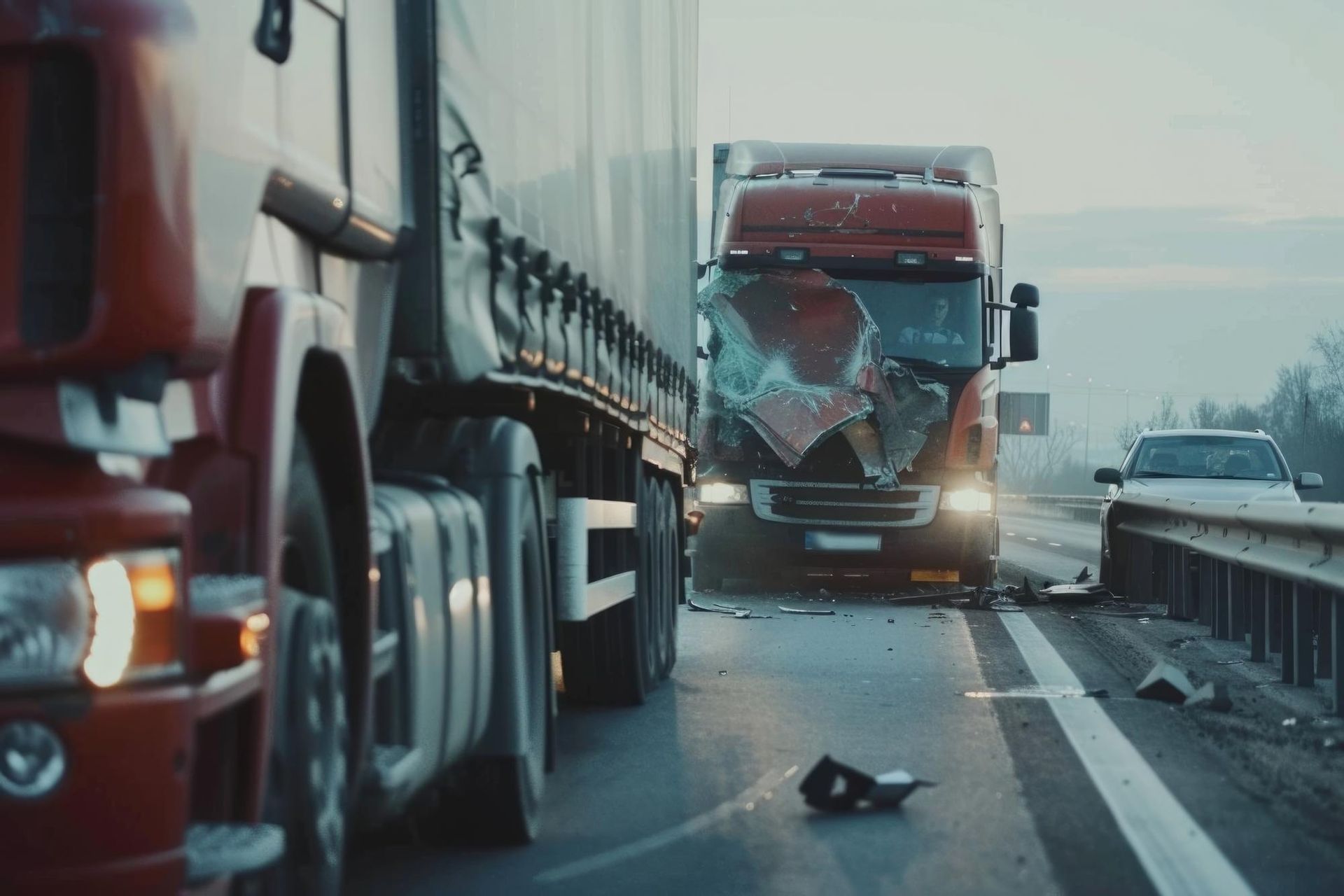
We are a Seattle truck accident law firm that sends preservation notice to the motor carrier before anything else happens, because the electronic data that proves what a truck driver was doing has a retention window measured in months and nobody at the trucking company is going to protect it for you.
The carrier had investigators working within hours. That head start is what we close first.
Evidence Does Not Wait, and Neither Do We
A commercial trucking case is won or lost on records the defendant controls. Some are overwritten automatically. Others are kept only as long as federal retention rules require, and nothing obligates a carrier to preserve a record no one has demanded.
Within days of being retained, we send a formal spoliation letter putting the motor carrier and its insurer on written notice to preserve:
Electronic logging device data and the driver's hours-of-service records.
The engine control module, meaning the black box, and its speed, braking, and throttle data.
Dispatch records, satellite messaging, and driver communications.
Maintenance, repair, and pre-trip and post-trip inspection files.
The driver qualification file, training records, and prior violation history.
Drug and alcohol testing records for the driver.
The bill of lading, weight tickets, and loading documentation.
The tractor and trailer themselves, held for inspection before repair or sale.
Once that letter is served, destroying the evidence becomes its own liability for the carrier. That shift is the single most valuable thing that happens in the first week of a trucking case, and it is the reason these cases should not wait.
Who Is Liable in a Truck Accident in Washington State
Truck accidents are rarely two-party cases. Several businesses can share responsibility for the same crash, each with its own insurance and its own lawyers, and finding all of them is frequently the difference between a single policy limit and full compensation.
Step 1:
The driver
Fatigue, hours-of-service violations, distraction, speed, and operating a vehicle known to be defective.
Step 2:
The motor carrier
Negligent hiring, inadequate training, and dispatch schedules that make compliance with federal limits impossible.
Step 4:
The shipper or loading company
Overloaded trailers, improperly secured freight, and load shifts that cause rollovers and jackknifes.
Step 5:
The parts or vehicle manufacturer
Defective brakes, tires, or safety systems that failed in ordinary use.
Federal rules set the standard those parties are measured against. Under the Federal Motor Carrier Safety Administration hours-of-service rules, a property-carrying driver may drive no more than 11 hours after 10 consecutive hours off duty, may not drive beyond the 14th hour after coming on duty, must take a 30-minute break after 8 hours of driving, and is capped at 60 hours in 7 days or 70 in 8. When the logging data shows those limits were exceeded, the case changes considerably.
Seattle truck collisions cluster, and they cluster for reasons tied to how freight moves through this city.
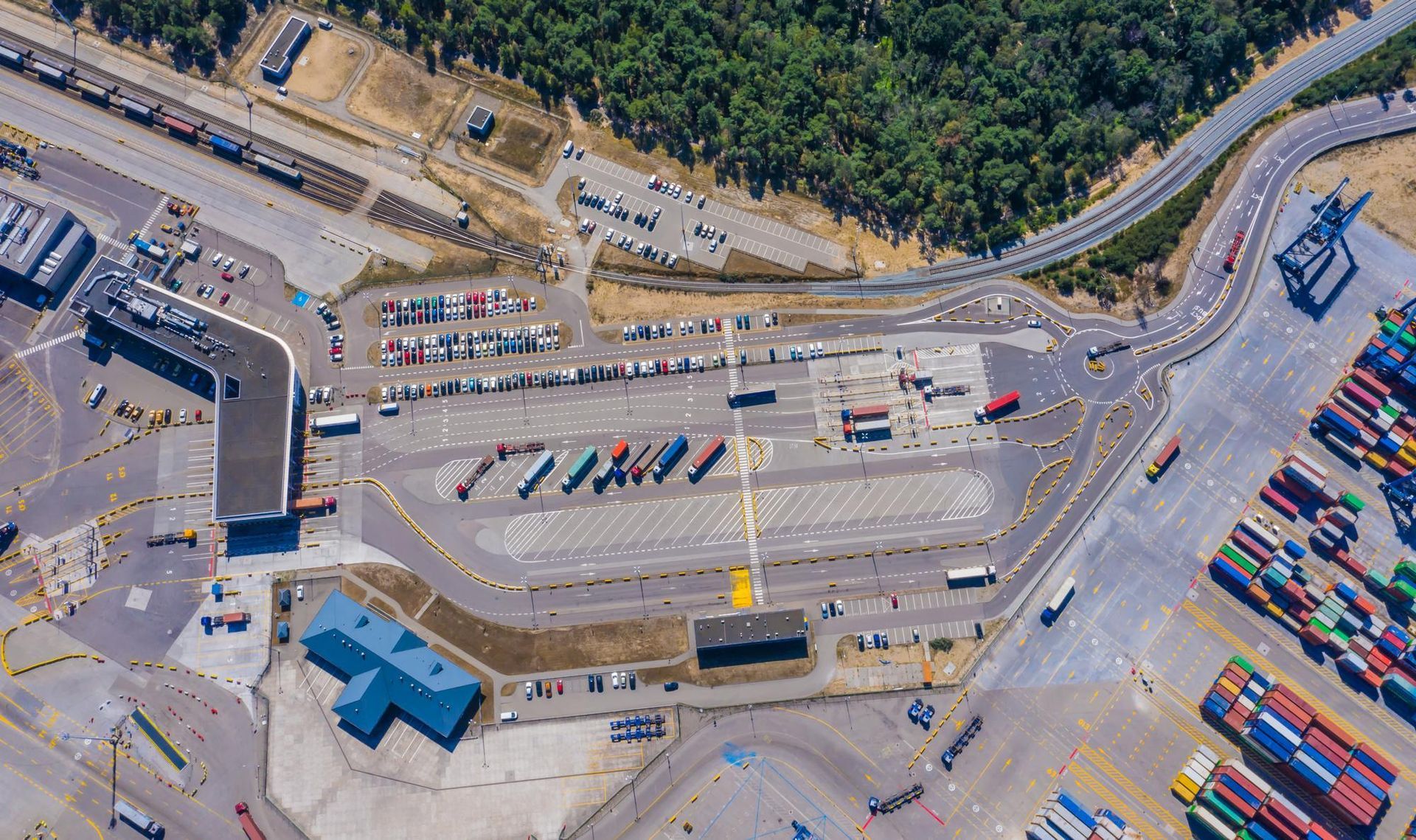
The Port of Seattle terminals sit along the Duwamish waterfront and the SODO industrial area, and the containers leaving them travel a short, dense set of routes. East Marginal Way South is the critical last-mile connector between the terminals, the rail yards, and the regional highway system, and the City of Seattle has designated it a Heavy Haul Route, meaning it is built and permitted for oversized loads and trucks carrying flammable cargo. The Spokane Street corridor feeds it. From there freight moves onto the I-5, I-90, and I-405 grid, and the city runs a Heavy Haul Network permitting program with the Port for overweight vehicles operating in and out of that area.
Three consequences for someone who has been hit:
- Port-area collisions involve permitted overweight loads. A truck operating legally under a heavy haul permit is carrying more than a standard tractor-trailer, and collision forces scale with weight.
- The liability chain is longer at the port than on the highway. A drayage move can involve an owner-operator, a motor carrier, a freight broker, a chassis provider, a terminal operator, and a shipper, each a separate business carrying separate insurance.
- Long-haul trucks arrive with hours already logged. Freight reaching Seattle from the east crosses the Cascades on I-90 over Snoqualmie Pass or on US-2 over Stevens Pass, both subject to winter chain restrictions and closures. A driver who has fought a mountain pass and lost hours to it is a driver under pressure to make up time, and that pressure shows up in the electronic logs.
One structural detail matters for downtown collisions specifically. The SR-99 tunnel, which replaced the Alaskan Way Viaduct and opened in February 2019, runs two miles beneath downtown with no mid-tunnel entrances or exits. A collision inside it cannot be cleared to a shoulder or an off-ramp, which affects response times, secondary collisions, and the severity of what happens after the initial impact.
None of this appears in a collision report. It comes out of the carrier's own records, which is why preservation notice matters so much here.
Where Seattle's Truck Traffic Actually Comes From
Why a Truck Case Is Not a Bigger Car Case
A loaded tractor-trailer can weigh twenty to thirty times what a passenger vehicle weighs, so occupants of the smaller vehicle absorb nearly all of the energy in a collision. Spinal cord injuries, traumatic brain injuries, amputations, crush injuries, and internal organ damage are typical outcomes rather than exceptional ones. Injuries at that level require a claim built around decades of care instead of a course of treatment, which means future medical costs, rehabilitation, home and vehicle modifications, attendant care, and lost earning capacity all have to be projected and proven. Our statewide guidance on truck accident claims covers the investigation framework in more depth, and our catastrophic injury practice explains how lifetime costs are calculated.
We also represent Angelenos in motorcycle, bicycle, and pedestrian collisions, rideshare and uninsured motorist claims, premises liability and slip and fall cases, construction site injuries, nursing home abuse, product liability, dog bites, and wrongful death. Our statewide guidance on car accident claims and on truck accident claims covers how each type of case is built, and our catastrophic injury practice explains how long-term damages are calculated.
📞 Call us today for a free consultation: (888) 932-2626 →
You Have Three Years in Washington
Washington allows three years from the date of injury to file most personal injury lawsuits, under RCW 4.16.080, compared with two years in California. In a wrongful death case the three-year period generally runs from the date of death rather than the date of the injury.
Claims involving a government entity work differently. If a city, county, or transit vehicle was involved, or if a dangerous condition on a public road contributed to the crash, RCW 4.96.020 requires a formal tort claim to be presented to that entity's designated agent, after which sixty calendar days must pass before suit can be filed. The limitations period is tolled during that window. State highway claims follow a parallel process. Both add months to a timeline people assume is entirely in their control.
Do not let that extra year change your timeline. The filing deadline and the evidence deadline are completely different things, and in trucking cases the second one arrives first. David Kashani is admitted to the Washington State Bar and is a member of the Washington State Association for Justice, so this case is handled here rather than referred out, and our
Seattle personal injury lawyers can look at it now and tell you what needs to happen immediately.
The Truck Crashes We Handle
- Tractor-trailer, semi-truck, and 18-wheeler collisions.
- Jackknife and rollover crashes, including load-shift rollovers.
- Underride and override collisions, which produce catastrophic injuries at moderate speeds.
- Wide-turn and blind-spot collisions in city traffic.
- Delivery van, box truck, and last-mile commercial vehicle collisions.
- Wrongful death claims arising from any of the above.
Our record of recoveries, including truck collision cases, is listed on our
results page.
Start Building Your Case Today
Truck Accident Questions Washington Families Ask
-
Who is liable in a truck accident in Washington state?
Often several parties at once. The driver, the motor carrier, the maintenance contractor, the shipper who loaded the freight, and a parts manufacturer can each carry a share, and each may have separate insurance. Identifying every one of them matters because a single policy frequently cannot cover a catastrophic injury.
-
What is a spoliation letter and why does it need to go out so fast?
It is formal written notice requiring a carrier and its insurer to preserve evidence relating to the crash. It matters because electronic logging data, driver logs, and maintenance records have short retention windows, and a damaged truck can be repaired or sold within weeks. Once the letter is served, destroying that evidence carries consequences for the carrier.
-
How long do I have to file a truck accident claim in Washington?
Generally three years from the date of the crash under RCW 4.16.080, with shorter notice requirements if a government entity is involved. That is the filing deadline, not the investigation deadline, and in trucking cases the evidence can be gone long before three years have passed.
-
The trucking company's insurer already called me. Should I speak with them?
No, not before you have counsel. Carrier insurers assign serious crashes to experienced adjusters within hours, and early contact is aimed at locking in a version of events and testing how quickly you will settle. Decline the recorded statement and give them your lawyer's information.
-
Which courthouse would my King County case be in?
It depends on where the crash happened. King County Superior Court splits civil cases into a Seattle Case Assignment Area, covering the county north of Interstate 90 including the I-90 right-of-way, and a Kent Case Assignment Area covering the rest. Seattle Area cases are heard downtown at 516 Third Avenue, Kent Area cases at the Maleng Regional Justice Center about twenty miles south.
-
What does it cost to bring a truck accident case?
Nothing upfront. We work on contingency and you owe no attorney's fee unless we win. We advance case costs, which in trucking matters routinely include accident reconstruction and expert analysis, and recover them out of a settlement or verdict.
Get Preservation Notice Out This Week
Every week that passes is a week the carrier's records get closer to being legally disposable. Call us and that stops.